Showing posts with label informative. Show all posts

Thursday, September 22, 2011

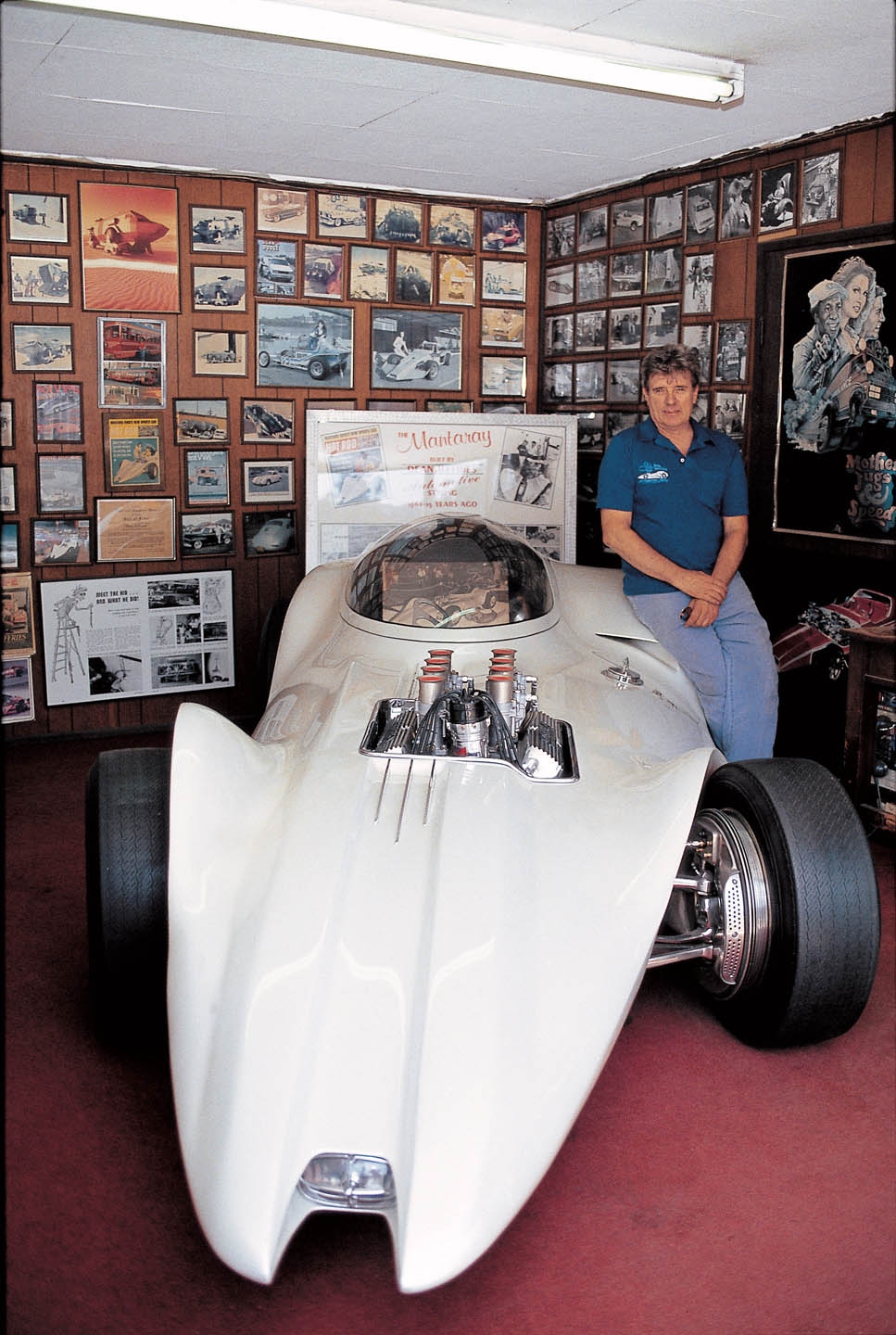
Why did Dean Jeffries' Mantaray have a 289 Cobra engine? Cool story

Dean painted the first AC Cobra several times for Carroll Shelby.... painting it in different colors in order to fool magazine editors into thinking that many cars had been built... when actually only one prototype was.

So in appreciation Carroll gave Dean a 289 Cobra engine

Below is what it looked like in 1973 from http://www.huffreport.com/archives/oldpics/the70s.htm
photos from http://www.myrideisme.com/Blog/wp-content/uploads/2009/08/701.jpg
and http://www.ultimatecarpage.com/gallery/15647/Dean-Jeffries--Mantaray.html

Read more...

Saturday, September 10, 2011

Where did the salt of Bonneville go? The BLM effed up... they screwed up bad

The Save the salt coalition http://www.savethesalt.org/Save_the_Salt/Save_the_Salt%21.html and SEMA http://www.sema.org/ got BLM to take action, do a study, and conclude that a replenishment program would stabilize the Salt Flats.

But BLM went into an arrangement with the the last mining company, and didn't make a regulation that would continue to force all mining operations in Utah to adhere to the same level of replenishment, and leave the salt in the Bonneville Salt Flats to the national landmark that it is... and not being sold in bags to apply to roads.

The company currently mining in Intrepid Potash http://www.intrepidpotash.com/ Based in Denver, Colorado, Intrepid Potash, Inc. owns and operates Intrepid Potash - Moab, LLC, Intrepid Potash - Wendover, LLC, both potash mines located in Utah; and Intrepid Potash - New Mexico, LLC, with operations in Carlsbad, New Mexico.

Buy your salt from someone else if you like racing in general, or Bonneville specifically

I got motivated by reading Jean Jennings editorial in Automobile Magazine, Oct 2011 issue

Read more...

Women, and the automotive world... specifically the Islamic/Muslim country of Saudi Arabia, which outlawed women drivers (male chauvinism, no religious text from their holy book, or decree from Muhammad spoke of cars, nor of women drivers)

So.. .  why don't men let women drive in Saudi Arabia? Women have been riding horses since before written history in Suadi Arabia... and the main bullshit line the Saudi govt ( the Saud family) give is that women are (by religious decree) supposed to modest... and sitting in a car behind the wheel is less modest than sitting a horse?

Chauvanism and religion have no logic, nor intelligent answer to a question that asks for facts.

This year of the Arab Spring of revolution the women in Suadi Arabia are protesting the nonsense and risking persecution, prosecution, harassment, and jail time with unreported indignities.

Show some support to those women... they are someone's sister, someone's mom. They don't deserve this crap simply because they were born in a country run by assholes.

To give them encouragement and support, let them know on Facebook and Twitter, or tell the US State Dept to keep hounding the Suadi Govt. http://www.guardian.co.uk/world/2011/jun/21/hillary-clinton-saudi-female-drivers

Saudi woman aren't alone in dealing with dumb ass men keeping them from equal rights, General Motors in 1957 hired 9 women to be designers, and paid them less than the men. Indianapolis Motor Speedway didn't give women access to the pits til 1971

I just got motivated to write about this from the new issue of Automobile Magazine, Oct 2011

Read more...

How much of a raise should a CEO get in a year? Which would seem reasonable? 10% or 510% ?

in 2010

TRW CEO John Plant got 510% raise over his 2009 salary of 6.7 million
Ford CEO Alan Mulally 524% raise... yet his company has 14 billion in debt
Johnson Controls' Stephen Roell 424% raise

So... did those 3 companies make 4 to 500% better business decisions? Better profit? Better products?

Doubt it.

I read about this in the article by Jamie Kitman in Automobile Magazine, his source, and the full story is at http://www.autonews.com/apps/pbcs.dll/article?AID=/20110613/OEM02/306139854&sectioncat=product&template=printart

Plant's base salary was $1.9 million, but he made $28 million from stock option gains. Bonuses, stock awards and other means of compensation accounted for the rest of Plant's pay.
The $9.45 million bonus package Mulally received in 2010 was almost three times as much as his total compensation from 2009. The Ford CEO also earned $9.3 million in stock award gains and $1.4 million in base salary.

The median salary of CEOs who held their job for at least two years rose from $3 million in 2009 to $5.7 million in 2010, an increase of more than 90 percent from 2009, Equilar research analyst Aaron Boyd said.

Read more...

Hungarian made cars, the difficult struggle against political turmoil, lack of manufacturing, and frequent bureaucratic red tape... all they want is to build cars!

Hungarian car enthusiasts Pal Negyesi and Csaba Hajdu have researched the Hungarian car history thoroughly, and made a 35 page PDF that exemplifies the spirit of perseverance to surmount obstacles in the way of progress.

Their focus is the Hungarian cars made between the years 1945 - 1990, but the inventors, craftsman, and innovators often began before 1945... and so did the national and intenational conflicts and restrictions that created a one of a kind unique situation that resulted in the USSR organization COMECON ruling of 1949 that of all the allied countries, only Hungary would not be allowed to build cars. Busses and trucks, yes... but not cars that the people could use for personal enjoyment, business travel, and product distribution (flowers, parcel delivery, etc etc)

Just as important as the automobile enthusiasts informative look, is the historian enthusiasts understanding of the myriad problems that were brought about by WW2, the USSR governing bureaucracy regulations, lack of car parts manufacturing (no car tire makers for example led to using airplane tail tires), political refusal to allow foreign investors, the revolution of 1956, the oil crisis of 1973, the fall of the USSR in 1990 dissolving all the previous infrastructure that was just beginning to make progress in loosening govt owned company restrictions in involvement in cooperative ventures to produce car and parts... all complicated the Hungarian auto enthusiasts ability to make cars.

But read about the many one off cars that were prototyped, microcars that were made and attempted during this time, the 3 wheelers that were declared "motorbike and sidecar" etc etc in order to bring mobility to the people.


Price is EUR 1 or USD 1.4

There are two ways to pay:

- Either someone sends the amount via PayPal to npaul@hu.inter.net and then Pal will send him/her the link
- You can buy an e-book version at Amazon: http://www.amazon.com/dp/B005LOVR02

Read more...

Friday, September 9, 2011

US government owned car companies (GM for example) used taxpayer dollars to lobby against government regulations for higher fuel economy standards

That has to criminal, and politicians and bureaucrats should be fired. What a waste of money.

The politicians finally had the control of the car company, and didn't force the issue when they had the chance. What a bunch of corruption. 

Read more...

Wednesday, September 7, 2011

The Chicken War, and the Chicken Tax, and what they have to do with trucks made in Europe and Asia

The Chicken tax was a 25% tax on potato starch, dextrin, brandy, and light trucks imposed in 1963 by the United States under President Lyndon B. Johnson as a response to tariffs placed by France and West Germany on importation of U.S. chicken.

Largely because of post-World War II intensive chicken farming and accompanying price reductions, chicken, once internationally synonymous with luxury, became a staple food in the U.S. Prior to the early 1960s, not only had chicken remained prohibitively expensive in Europe, it had remained a delicacy. With imports of inexpensive chicken from the U.S., chicken prices fell quickly and sharply across Europe, radically affecting European chicken consumption. In 1961, per capita chicken consumption rose 23% in West Germany. U.S. chicken overtook nearly half of the imported European chicken market.

Subsequently, the Dutch accused the U.S. of dumping chickens at prices below cost of production. The French government banned U.S. chicken and raised concerns that hormones could affect male virility. German farmers' associations accused U.S. poultrymen of artificially fattening chicken with arsenic. In fact, U.S. chicken farmers, with Food and Drug Administration approval, had treated chicken feed with antimony, arsenic compounds, or estrogen hormones to stimulate growth.

The period from 1961–1964 of tensions and negotiations surrounding the issue, which took place at the height of Cold War politics, was known as the "Chicken War".

Eventually, the tariffs on potato starch, dextrin, and brandy were lifted, but over the next 48 years the light truck tax ossified, remaining in place to protect U.S. domestic automakers from foreign light truck production (e.g., from Japan and Thailand). Though concern remains about its repeal, a 2003 Cato Institute study called the tariff "a policy in search of a rationale."

As an unintended consequence, several importers of light trucks have circumvented the tariff via loopholes—including Ford (ostensibly a company the tax was designed to protect), which currently imports the Transit Connect light trucks as "passenger vehicles" to the U.S. from Turkey and immediately shreds portions of their interiors in a warehouse outside Baltimore.

http://en.wikipedia.org/wiki/Chicken_tax

Read more...

Iso Rivolta background info

Iso Rivolta was initially named Isothermos and manufactured refrigeration units before WW2.

After the Second World War, the company reopened its doors, completely changing its activity. In 1948 it began to build motorcycles, scooters and motocarries (three wheeled transport scooters/motorcycles). Among the most famous are the Furetto (1948), 'Isoscooter (1950),' Isocarro (1951), 'Isomoto (1954) and' Isosport (1953). The last Iso motorcycle was presented as the Iso 500 in 1961. Isomotos were known as expensive, but durable and well-built.

In the mid-1950s, he started to develop a miniature car for two persons and front entrance, initially with only three wheels, later, for reasons of stability, with four wheels (the two on the rear very close together): the Isetta Bubble Car. About 20,000 of the bubble cars were built at the Rivolta works near Milan, but this volume was dwarfed by that of the German licensee

Starting in 1954, Isetta was licensed to automobile manufacturers in several countries: France (by VELAM), Spain, Great Britain and Brazil (by Romi). The most successful, however, was the German Isetta built by BMW. The BMW-Isetta fulfilled the dream of mobility in post-war Germany and about 130,000 had been sold by 1962
 At the start of 1973 the Rivolta family ceded the business to an Italian American financier named Dr Ivo Pera who promised to bring American management know-how to the firm: the business faded rapidly into obscurity.
Found on http://en.wikipedia.org/wiki/Iso_Rivolta

Read more...

  © Blogger templates The Professional Template by Ourblogtemplates.com 2008

Back to TOP